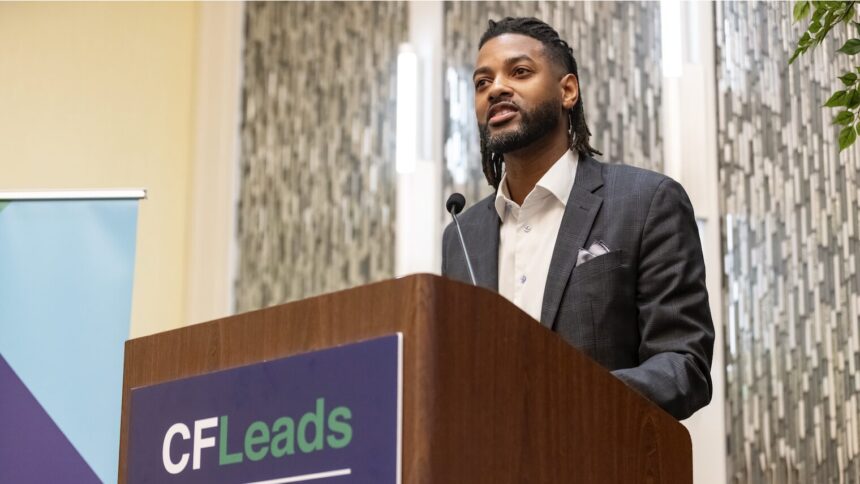
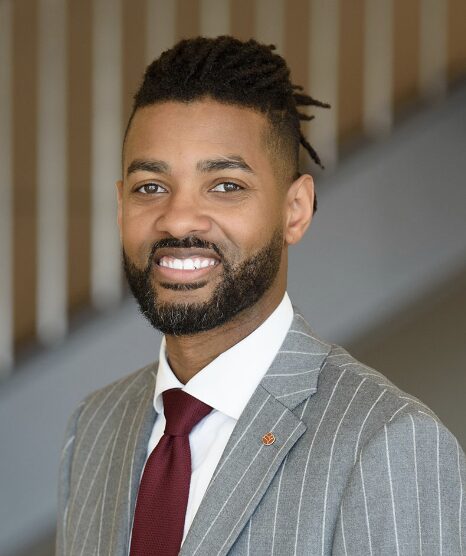
This article was written by Isaiah Oliver, President of The Community Foundation for Northeast Florida.
The Limits of Charity and the Responsibility of Community Foundations
Early in my career, as Vice President of Grantmaking and Community Leadership at the Community Foundation of Greater Flint—a $140 million community foundation at the time—I came to a realization that has stayed with me ever since: we were not going to program our way out of the challenges facing our community. Charity alone was not going to be enough. My discretionary grantmaking budget, no matter how thoughtfully deployed, was never going to meet the scale of what the moment demanded from philanthropy.
What I understood, instinctively, was that the real power of the community foundation lived beyond the grant. It lived in the name, the trust, the relationships, and the social capital that came with the institution itself. I had stepped into a seat that was bigger than any individual vision or aspiration, and I wanted to understand how to leverage that responsibility well—not just generously, but meaningfully.
That search led me to CFLeads.
At CFLeads, I found the place where that intuition became practice. It was—and remains—the repository, the distillery, and the proving ground for what it truly means to exercise community leadership. CFLeads gave language, structure, and discipline to the full toolbox of leadership that community foundations must deploy if they are going to be credible change agents. It is where we define, explore, and practice community leadership across geographies, across difference, and across moments of deep complexity. It became, and continues to be, the place where I grow into this work.
CFLeads as a Home for Clarity, Rigor, and Growth
Over more than a decade in the field—and now from the vantage point of having served as Chair of CFLeads—I’ve had the opportunity to watch this ecosystem evolve. I’ve partnered with CFLeads as a thought partner and benefactor, and I’ve benefited from it as a practitioner. I’ve watched the growth of leaders operating in this space, many coming from outside the field, seeking to understand both its history and the innovations shaping its future.
I’ve also watched community foundation CEOs underestimate the call of this work: the demand for impact, the weight of expectation, and the complexity of the systems we are navigating to make communities better places to live, work, and invest our best in.
What I’ve seen, consistently, is that when leaders come into CFLeads, the work becomes clearer—especially the work beyond grantmaking. That clarity doesn’t come from a single framework or ideology, but from the diversity of perspectives under the tent. CFLeads creates space for leaders to do what my mother used to say: eat the chicken and throw away the bones. Take what nourishes your work, set aside what doesn’t apply, and move forward better equipped than you arrived. But to do that, you need a place where collective wisdom is gathered, tested, and refined. CFLeads is that place.
A critical part of how CFLeads does this work is through disciplined peer learning. Across every leadership institute—whether executive leadership programs, place-based cohorts, or institutes focused on equity or economic mobility—there is a shared commitment to peer-to-peer mentoring and inquiry. Leaders listen deeply, advise from their own lived and professional experience, and allow themselves to be challenged in return.
The diversity of perspectives in the room doesn’t dilute the work; it sharpens it. The rigor of this process matters. The interrogation is real. The expectations are high. And the people selected into these competitive institutes bring the competence and credibility required to hold one another accountable. That discipline is where the magic lives—not performance for performance’s sake, but growth. The kind of growth that prepares leaders to show up differently when their communities need them most.
A Personal Story of Leadership Formation
There’s a story I often tell that makes this personal in a very real way: I am a CFLeads baby.
Before I ever formally entered philanthropy, my predecessor was participating in the CFLeads Executive Leadership Institute (ELI) for CEOs. She brought a live challenge to her peer learning group. The foundation was at an inflection point and ready to go deeper programmatically. She wanted to hire a Vice President of Community Impact—someone who could hold grantmaking and community leadership together in one role.
In her mind, there was a clear profile: an experienced grantmaking professional who understood philanthropy deeply and could operate comfortably within its norms. But in the course of her work, she had also encountered someone else—a relatively young guy with no formal background in philanthropy, no deep exposure to its concepts or language, but who was unmistakably a community leader. He knew people. He knew systems. He knew how to move across sectors. Everything outside the grantmaking space, he could probably do well. The grantmaking itself? That part he would have to learn.
She brought the dilemma to her CFLeads peers: should she hire a seasoned grantmaking professional to lead the work, or take a risk on this green, unproven candidate and teach him philanthropy?
The advice from the group was unequivocal: hire the “novice rockstar.” Hire the community leader and train him in philanthropy.
She took that advice and hired me as the foundation’s first Vice President of Grantmaking and Community Leadership.
That decision changed my life, but more importantly, it shaped the leadership posture of the institution. It taught me early that this field grows not just by perfecting technique, but by expanding who we believe can lead—and how we prepare them to do so.
What It Means to Lead Beyond the Grant
Beyond grantmaking, then, the question becomes: what do we actually leverage?
We leverage our ability, as community foundations, to pull together research and lived experience from across the country—to understand, explore, and interrogate the challenges shaping quality of life in real time. We leverage resident voice, recognizing that when the voices of those most impacted by our work are amplified and centered, the solutions become more grounded and the outcomes more durable.
We leverage policy, understanding that philanthropic dollars alone will never be sufficient to meet the scale of our communities’ needs. And we leverage our convening power—the unique role community foundations play as a bridge between generosity and community need. Sometimes the most important contribution is not money, but the ability to bring people, ideas, and institutions into shared purpose.
When these levers are pulled together—research, resident voice, policy, and convening—something larger emerges: a system of community foundations across the country, supporting one another and addressing challenges that are remarkably consistent from place to place, from access to healthcare and educational opportunity to economic mobility, democracy, belonging, and quality of life.
Stewardship of the Field—and What Comes Next
This is why leadership infrastructure matters. When an organization like CFLeads focuses on identifying and advancing best practices across geographies, we become stronger than the sum of our parts—not because our communities are the same, but because our responsibilities are shared.
If you have benefited from this field—from its credibility, its reach, or the trust communities place in our institutions—then investing in its leadership infrastructure is part of the responsibility that comes with the role. CFLeads exists so none of us has to lead alone, and so the next generation of community foundation leaders is better equipped than we were to meet the complexity ahead. For me, committing time, talent, and treasure to CFLeads is not about affiliation or visibility. It’s about stewardship—of the field, of the work, and of the communities that trust us to lead beyond the grant.
As I conclude my service as Board Chair, I do so with deep confidence in CFLeads’ future and in the leadership that will guide it forward. I am pleased to pass the gavel to Rose Bradshaw, whose career reflects a profound commitment to community leadership, equity, and systems-level change. Rose brings both strategic clarity and moral courage to this moment, and CFLeads will continue to grow and lead the community foundation field under her stewardship.
“Serving as Board Chair requires both deep belief in what community foundations can be and the discipline to help the organization live into that promise. Isaiah has done exactly that—challenging us, supporting us, and strengthening CFLeads at a pivotal time for the field. As we welcome Rose Bradshaw into this role, I am energized by the continuity of values and the bold leadership ahead.”


