
Leading the Way: How Community Foundations Can Put the SDGs to Work
As we close out our 2026 programming focused on the United Nations Sustainable Development Goals (SDGs), the lessons, insights, and connections from this work continue to shape what comes next. We’re excited to share this blog post, which reflects on the progress made and highlights why this work remains important. While our programming may be wrapping up, the work of advancing the SDGs and strengthening the role of community foundations in creating lasting community impact continues.
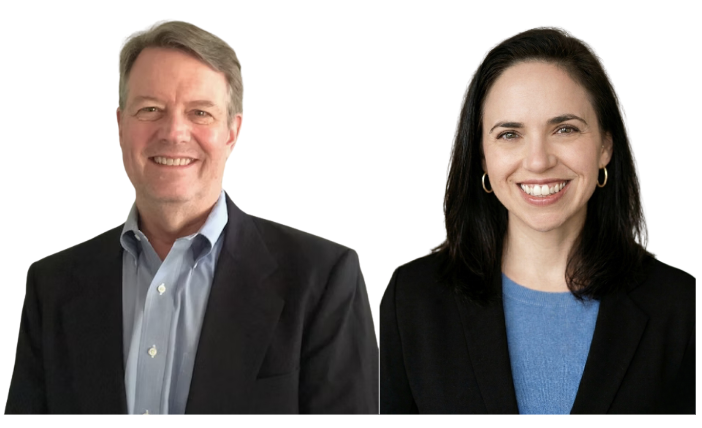
This guest post was written by Lawrence McGill, Principle, Ambit 360 Consulting, with contributions from Amanda Hartigan, Senior Director of Programs, Strategy, and Culture, CFLeads.
Since 2018, the Charles Stewart Mott Foundation has championed the Sustainable Development Goals (SDGs) as a framework for strengthening the work of community foundations. Unanimously approved by all member states of the United Nations in 2015, the SDGs are intended to provide a common global language for addressing critical issues facing people and the planet. As local catalysts for change, community foundations are well suited to playing a coordinating role in bringing the SDG conversation to their communities to address local issues.
Over the past eight years, Mott has underwritten nearly two dozen initiatives that have provided opportunities for more than 200 U.S. community foundations to engage in peer learning, knowledge exchange, and network building around the SDGs. Out of this work, more than a dozen learning products have been developed to help community foundations apply the SDGs in their work.
As a consultant, I have participated in many of these initiatives. At the outset, it was hard to see how a framework as complicated looking as the SDGs, with its 17 global Goals, 169 specific Targets, and 231 Indicators for measuring progress, could be turned into a tool that community foundations could readily apply to their work. Like most community foundations, I approached the SDGs with a combination of open-mindedness and skepticism.
Project after project, I observed and tested many different strategies for bringing community foundations into the SDG conversation in ways that resonated with them. But about four years into this work, I could see that while we had built a certain amount of SDG literacy among community foundations, substantive engagement with the SDGs was still elusive. Then, two things happened that, for me, clarified the central value proposition of the SDGs for community foundations and suggested a radically simplified way for community foundations to actually engage with the SDG framework.
SDGs as an Operating System
The first involved flipping the relationship between the SDGs and community foundations on its head. That is, instead of focusing primarily on educating community foundations about the SDGs per se (which, in principle, most community foundations already subscribe to), let’s imagine how the SDG framework might be put to use as a kind of “operating system” for community foundations. Because, as it turns out, the SDG framework directly addresses almost every major operational challenge a community foundation faces, including:
- Strategic planning
- Developing effective approaches to achieving programmatic goals
- Assessing impact
- Communicating the intentions and impact of their work to the community
- Engaging productively with community stakeholders
- Forging strategic partnerships
SDGs and Community Leadership
The second insight emerged through working with CFLeads to pair the SDGs with the Community Leadership Framework. In short, while the SDG framework maps out the “What” – i.e., the scope of issues (and interactions among issues) that community foundations work on – the Community Leadership Framework specifies the “How” – i.e., the ways community foundations can build the relationships and partnerships needed to bring about sustainable, community-level change. Over the years, CFLeads has developed a robust set of specific actions community foundations can take as they engage in community leadership work. These documents can be used as checklists to help you develop strategies for “uniting people, institutions and resources” on a wide set of issues.
From Broad Issues to Specific Outcomes
From issues that range from human needs like food security and housing to justice, peace and prosperity, the SDG framework articulates specific desired outcomes, written in intentional, action-oriented language, along with suggested metrics for measuring progress toward those outcomes. Moreover, the SDG framework was built with two important principles in mind: 1) All issues are interrelated; 2) No one left behind. The first principle means that even if you are focusing on a specific issue (such as education), you are actually working at the nexus of many interrelated issues (e.g., food security, health care, affordable housing, and decent work). The second principle means working in ways that result in equitable outcomes.
Working closely with both the Community Foundation of Greater Flint and CFLeads, we have developed a checklist of roughly 100 specific outcomes corresponding to the kinds of results community foundations commonly seek to achieve (these are called “Targets” in SDG lingo). Using this checklist, foundations can precisely “target” the end results they are trying to achieve and articulate those specific outcomes using intentional and action-oriented language. For example, instead of saying, “we are working on” early childhood education, foundations could use the language of SDG Target 4.2 to state more intentionally that they are working toward a more specific outcome, namely, “ensuring that all girls and boys have access to quality early childhood development, care, and pre-primary education so that they are ready for primary education.” Action-oriented language like this is much more evocative as to the specific investments of time, energy, and resources a community foundation might bring to this task. Such clarity is helpful not only for the foundation itself but also in conversations with the community, partners, board members, donors, and others.
Together, the steps of “targeting” and identifying interactions among targets ensure that issues are not treated in silos, but as interconnected components that work in tandem to create sustainable communities. These two steps also prepare community foundations to engage purposefully in community leadership work that allows communities to come to consensus on priority outcomes and fosters the building of relationships and partnerships that are essential for achieving community level impact.
Putting the Framework to Work
In a nutshell, then, we have boiled down both the SDGs and the Community Leadership Framework into a set of complementary checklists that can be used to articulate the community-level outcomes you (and the community) are trying to achieve, and to chart a course of community leadership to mobilize stakeholders and partners into collective action. You don’t have to become an expert on the Sustainable Development Goals to apply them strategically and specifically to your own local goals. Use the checklist of SDG Targets, instead, as a convenient and efficient way to ensure that you are heading in the right direction, anticipating obstacles, identifying allies, and staying on course to achieve community-level change.


