
The Systems That Sustain Community Leadership
The inaugural CFLeads Fellowship has successfully concluded, marking the completion of a meaningful journey of learning, leadership, and collaboration. Created to cultivate emerging leaders who are passionate about strengthening the role of community foundations in driving positive change, the Fellowship provided participants with the opportunity to engage in mission-aligned projects, deepen their understanding of the field, and build lasting relationships with peers and mentors.
As they conclude the program, each Fellow has reflected on their experience, the insights they gained, and how the Fellowship has shaped their leadership journey. We invite you to read their reflections and learn how this experience has influenced their work, strengthened their commitment to community leadership, and prepared them to help shape the future of community foundations.

Imani Missouri, CFLeads 2025-26 Graduate Fellow
When I began the inaugural CFLeads Fellowship, I expected to grow professionally through exposure to the community foundation landscape and national philanthropy. What I did not fully anticipate was how much the experience would reshape my understanding of stewardship, resilience, and the unseen work required to sustain the social sector.
Throughout the Fellowship, I had the opportunity to engage with leaders across the country who are navigating the compounding effect of geopolitics on rising community needs. As On the Brink of New Promise: The Future of U.S. Community Foundations notes, “Finding sustainable ways to focus on communities, provide long-term leadership, and create coordinated approaches that demonstrably improve communities is tough work.” The infrastructure needed to engage in this tough work is both human and technological. It is also communal and operational. CFLeads and its growing network of community foundations are proof of weathering uncertainty while holding steadfast to the future of place-based philanthropy.
One of the most transformative aspects of my experience came through supporting CFLeads during a critical operational transition. What initially appeared to be behind-the-scenes database management quickly revealed itself to be mission-critical infrastructure that supports relationship management, strategic engagement, and excellence across the field. I stepped in to strengthen our field-wide data capacity. As a result, I personally updated 56% of community foundation records, helping reduce a significant national backlog improving data integrity connected to more than $10 billion in community foundation assets.
That experience provided a more expansive view of how I think about leadership. Sometimes the work that feels the least visible carries the greatest strategic weight. Leadership isn’t always loud. It can be quiet. It is also about consistency, reliability, and the willingness to strengthen the systems that allow organizations and communities to thrive. I came to view this assignment as more than data management. I grew to understand it as a form of stewardship. Protecting the accuracy of information, sustaining institutional trust, and helping maintain the operational backbone of a national network are all forms of community leadership.
Another defining aspect of my Fellowship experience was witnessing what it looks like for an organization to intentionally practice care amid uncertainty. Through participation in The Resilience Initiative and CFLeads’ internal “Wellness Wednesday” spaces, I experienced a culture that treated wellness not as secondary to leadership, but as essential to it.
CFLeads demonstrated that a national and fully remote team can still foster space for relationship-building, encouragement, care and rest. That commitment has left a lasting impression on me. It reinforced my belief that sustaining the infrastructure of the philanthropic field requires more than strong systems and strategy. It also requires cultures of care that allow leaders, organizations, and communities to remain resilient over time.
As I look toward my next chapter, I leave this Fellowship with renewed clarity about the kind of leader I hope to become: one who values both strategy and stewardship, leads with intentional care for humanity, and who understands that transformative leadership is holding integrity while serving through uncertainty.
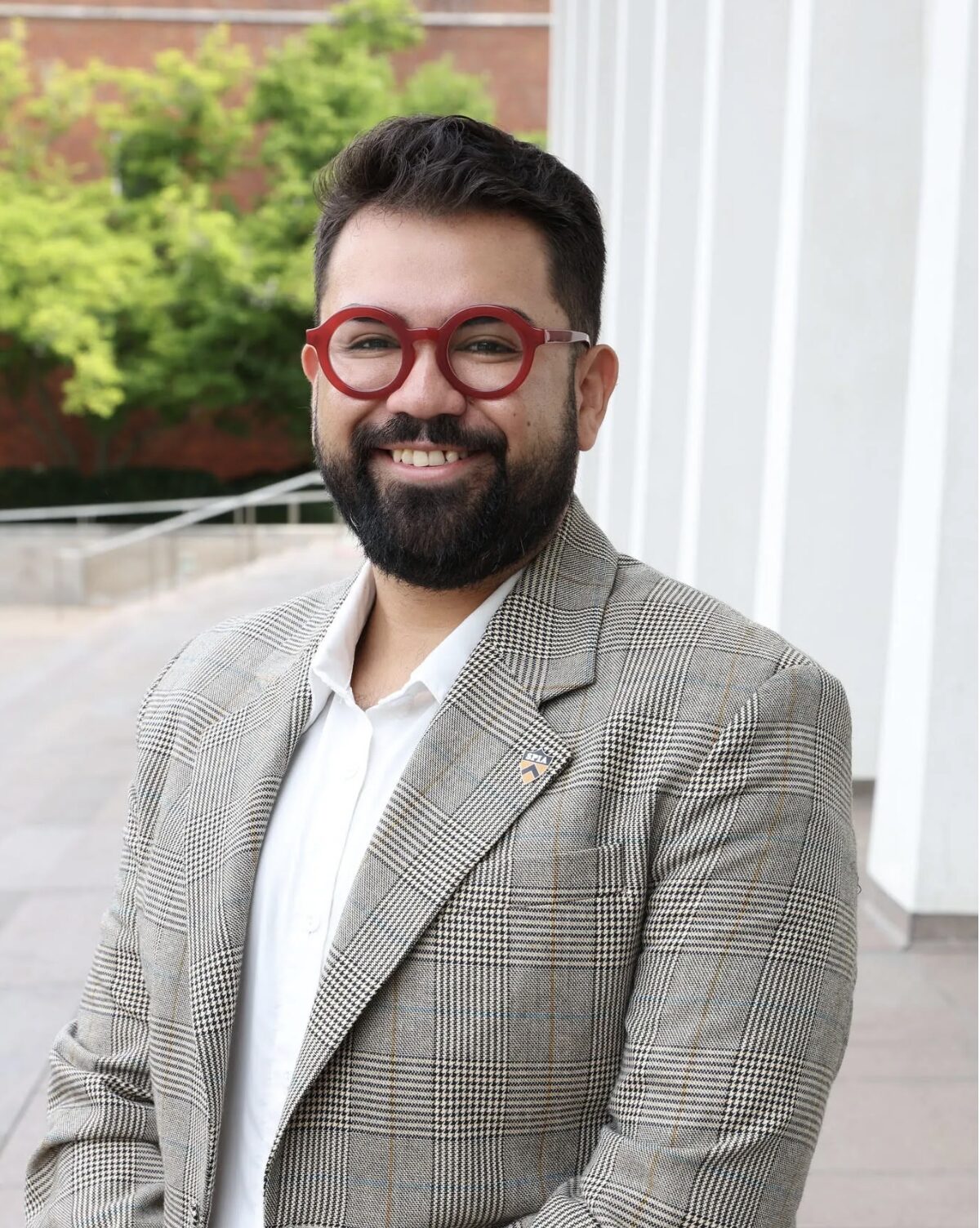
Adán Chávez, CFLeads 2025-26 Graduate Fellow
A scholarship from my local community foundation made it possible for me to pursue higher education and graduate debt-free from the University of California. It brought me back home to California’s Inland Empire, where I began my career in civic engagement, eventually partnering with the Inland Empire Community Foundation to mobilize communities for the 2020 Census. That experience shaped how I understand community foundations – and their potential and power to create change.
Now, as I near completion of my Master of Public Affairs at the Princeton School of Public and International Affairs and reflect on my time as an inaugural graduate Fellow with CFLeads, I find myself returning to a similar question: What does it truly take for community foundations to meet the challenges of this moment and keep pushing for long-lasting durable systems-change?
Across the country, community foundations are playing an increasingly vital role in strengthening and protecting civic health. They are convening stakeholders across sectors, mobilizing resources in times of crisis, supporting nonprofit ecosystems, and helping communities navigate complex and rapidly changing environments.
Of the most defining–I believe–is the rise of artificial intelligence. Rapid technological change is reshaping how people work, play, live and learn. For community foundations, this shift presents both challenges and, more importantly, opportunities.
Community foundations are uniquely positioned to help communities navigate this age – whether by supporting nonprofits in adopting new tools, addressing digital inequities, or shaping local responses to AI’s impacts on workforce development, educational equity, and economic mobility. Through CFLeads’ national Community Foundations Trends and Priorities survey, one thing became clear to me: community foundations are ready, but the infrastructure is not.
Systems change cannot be achieved through short-term, restricted funding alone. It requires flexible, sustained, and often risk-tolerant capital–resources that allow community foundations to respond to emerging needs, invest in long-term strategies, and support the organizations doing the work on the ground. Without intentional investment in learning, skill development, and internal capacity, community foundations risk falling behind at precisely the moment their communities need them most. They are being called to lead in an increasingly complex, challenging, and fast-changing environment—one shaped by increasing polarization, misinformation, economic uncertainty, and rapid technological change.
To meet this moment, community foundations will need sustained and flexible capital, stronger internal capacity and infrastructure, and access to the tools, training, and learning opportunities required to adapt and lead. And organizations like CFLeads play a critical role in making progress possible–helping to surface shared challenges, build collective knowledge, and support the field in navigating what comes next.
As I prepare to graduate and continue my journey in philanthropy, I carry with me a deeper appreciation for the role community foundations play in advancing the public interest. I also carry a clearer understanding of what it will take to support them: not just belief in their potential, but sustained investment in their capacity and power.
The moment we are in demands bold leadership, cross-sector collaboration, and a willingness to adapt. Community foundations are ready. Now, we must ensure they have the resources, tools, and support to lead what comes next.


