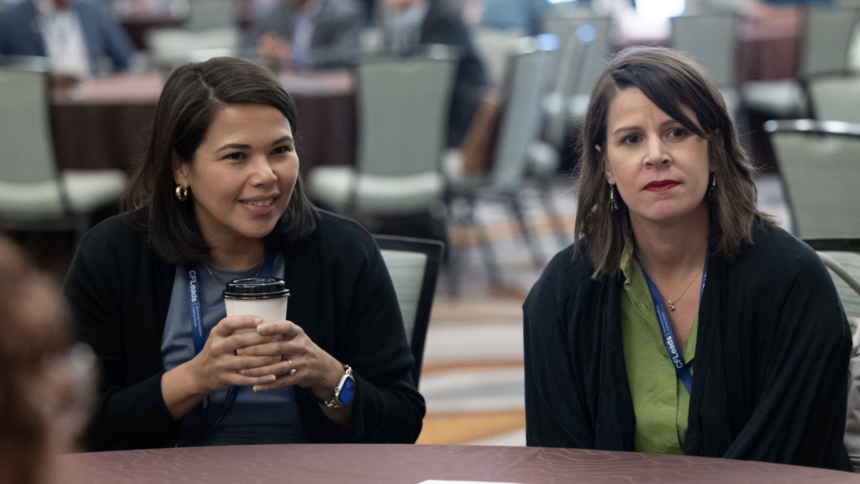
As part of our 2024-25 Economic Mobility Action Network (EMAN) work, CFLeads engaged an EMAN Extension group of several community foundations, providing technical assistance, resources, and additional support to advance their work.
To amplify the experiences and insights of participating foundations, CFLeads co-authored the following three blog posts, highlighting their unique journeys, community-based approaches, and lessons learned along the way. Together, these stories offer a closer look at how community foundations are driving meaningful, lasting change in their communities.
Greater Houston Community Foundation
This blog post was written in collaboration with the Greater Houston Community Foundation.
Community Demographics
It was on September 12, 1962, at Houston’s Rice University, when President John F. Kennedy fatefully declared, “We choose to go to the moon in this decade and do the other things, not because they are easy, but because they are hard, because that goal will serve to organize and measure the best of our energies and skills, because that challenge is one that we are willing to accept, one we are unwilling to postpone, and one which we intend to win…”
Kennedy was announcing America’s commitment to reaching the moon, but these galvanizing words ring just as urgently today for one of this generation’s defining challenges: Houston, the fourth largest city in the nation with 2.4 million residents, is also the country’s most impoverished major city, with roughly one out of five living in poverty. That is the reality Greater Houston Community Foundation is working to change.
All the Pieces are Here…
Houston has all the components to lead the nation in advancing economic mobility. We are the sixth largest economy in the nation and among the fastest-growing large metros for job creation historically, routinely outpacing the nation. The region is a global hub for innovation: leading the world’s energy industry and its transition; anchoring the Texas Medical Center, the largest medical complex in the world and a powerhouse for advancing medical devices and life-saving treatments; and, situated on the Gulf Coast, serving as a living laboratory for the solutions climate resilience demands.
Sprawling over 8,800 square miles, the 10-county Houston Metropolitan Statistical Area is larger than several states, including Massachusetts, New Jersey, and Connecticut. As home to 7.8 million people, the region encompasses a strong urban core with surrounding suburban and rural communities. From cattle ranches to chemical refineries, this geography shapes everything from how families access opportunity to how agencies deliver services.
Houston is also among the most racially/ethnically diverse in the nation, attracting entrepreneurial, talented, and hard-working people from across the globe—one out of four Houstonians were born outside the U.S.
…But Not Everyone is Benefiting
And yet, for all of Houston’s dynamism, far too many residents have been left behind. One in four children in Harris County, the third most populous county in the nation, grows up in poverty. Nearly half of families struggle financially, despite most working full time. more than half of renters spend more than 30% of their income on housing, a stark shift for a city once considered the most affordable large metro in America.
Children from low-income families living just 15 miles apart in Houston can have dramatically different social and economic outcomes as adults, a reminder that geography and zip code remain among the most powerful determinants of opportunity. Relatedly, Houston has historically relied on importing talent than on cultivating it locally. We are not preparing today’s children for tomorrow’s jobs, and the cost of that gap falls hardest on low-income families and communities.
The Economic Mobility Vision and Strategy
These challenges were not created by any single force. They are the result of historical policies and interconnected, compounding obstacles. Addressing them will not come from one entity or siloed intervention, it will require all of us to work together toward this common goal.
Kennedy’s words from 60 years ago speak directly to this moment. Advancing economic mobility and disrupting intergenerational poverty is Houston’s moonshot. When we finally meet that challenge, we will have earned the right to call ourselves a place that works for everyone. This is the challenge that we must be “unwilling to postpone.”
The Vision
Greater Houston Community Foundation envisions a region where collective action drives measurable gains in upward mobility for low-income residents, and positions Houston as a nationally recognized place of opportunity for everyone.
That vision was built over years, not from a single planning document. In 2019, we launched Understanding Houston, our regional data indicator project that makes credible community data and insights accessible to anyone working to drive positive change. In 2023, we established the Greater Houston Disaster Alliance in partnership with United Way of Greater Houston to build regional resilience for our most vulnerable neighbors. That year, a year-long learning journey and listening tour led us to identify economic mobility as the focus of our inaugural High-Impact Grantmaking initiative, launched in 2024.
Finding Clarity Through Dedicated Space
Three initiatives and six years into our Community Impact work, we recognized the need to more deliberately define the role the Community Foundation should play. As we began a strategic planning process, CFLeads offered technical assistance through the Economic Mobility Action Network (EMAN) to refine our theory of change. The alignment of these efforts proved invaluable, with each informing the other in unforeseen ways.
The technical assistance process gave our team dedicated time and space to wrestle with hard questions and to think out loud, surface assumptions, ask uncomfortable questions, and sit with uncertainty. Our facilitator brought an outside perspective on what peer community foundations were doing, and knowledge of common field approaches. Crucially, the process reminded us that a theory of change is a living document, never final. That reframing gave us permission to move forward without waiting for perfect answers.
We came away with genuine clarity: about the populations we most want to impact, the outcomes we are working toward across different time horizons, and a working set of assumptions to name, examine, and revise as we learn. We also reframed how we talk about our work—not as three discrete programs, but as two core areas of impact: advancing economic mobility and supporting disaster recovery and resilience, pursued through complementary strategies and collaborative approaches.
That clarity yielded a declared impact statement: Houstonians have access to the opportunities, support, and resources they need to achieve economic security and upward mobility.
A Portfolio Built for Systems Change
Achieving that impact requires a multi-sector approach, because no single entity can do it alone. Our reimagined economic mobility strategy reflects that through a portfolio of initiatives designed to work at different levels simultaneously.
We began by focusing on alignment. We convened the Houston Economic Mobility Coalition as a cross-sector partnership uniting economic mobility leaders to align investments and strategies and define a shared vision and common metrics for advancing upward mobility across the region. Founding Core Partners include Good Reason Houston, Greater Houston Community Foundation, Greater Houston Partnership, Gulf Coast Workforce Board, the Kinder Institute for Urban Research at Rice University, and United Way of Greater Houston. The Coalition continues to grow, recently adding housing expertise and seeking a public health partner.
The Coalition’s inaugural Economic Mobility Summit, held in October 2025, convened more than 150 leaders and featured Dr. Raj Chetty, Harvard Economist and Director of Opportunity Insights, and Sarah Rosen Wartell, President of the Urban Institute. This gathering brought together leaders across sectors to build deeper connections, exchange ideas, and accelerate efforts that advance economic mobility. The Summit also served as a space to pressure-test ideas and build broader stakeholders buy-in. The Coalition will continue engaging people and organizations in targeted ways throughout the year, ensuring diverse community voices inform its work in between larger convenings.
We recognize that sustainable progress requires committed resources over time. Our pilot High-Impact Grantmaking initiative will transition to an Economic Mobility Fund, launching in 2027. This pooled fund, made possible through collaborative giving from generous donors, will support neighborhood- and system-level investments in high-quality education from cradle to career, rewarding work, and other strategies aligned with our Coalition partners. The Fund will reach children 5 and under, youth and young adults, and low-income families in historically marginalized neighborhoods of Harris County.
Our community engagement continues through the Houston Economic Growth Collaborative, a cross-sector effort involving more than two dozen agencies focused on the Northeast Houston community’s vision for greater resilience and economic mobility. To date, the Collaborative has catalyzed more than $10 million in operational, citywide, and neighborhood-level investments.
Ahas and Lessons Learned
Tangible Wins & Important Insights
CFLeads’ technical assistance did not deliver a ready-made strategy. It gave us the clarity and confidence to name our own. Through the experience of developing our theory of change, we achieved several tangible wins while also uncovering important insights:
- A solidified draft theory of change, including a named set of assumptions to revisit and revise as we learn.
- Clarity on the specific populations we are trying to reach and desired outcomes across different time horizons.
- A declared impact statement for our economic mobility work overall.
- A reframed Community Impact portfolio organized around core areas of impact rather than discrete programs, enabling a streamlined way to talk about and connect our work.
- Dedicating space to ask hard questions, sit with strategic uncertainty, and move forward without all the answers.
Looking Ahead
Our theory of change will continue to evolve. And we now have greater clarity about the questions guiding our work, the outcomes we aim to achieve, and how the components align to drive impact.
The work ahead is equally exciting. In the coming months, we will finalize and share our reimagined economic mobility strategy with partners, funders, and the community. We will also continue raising funds for and building out the Economic Mobility Fund.
By deepening our capacity to use and share local data, engage residents, work across sectors, and marshal resources around shared goals, the Community Foundation is well positioned to serve as a catalytic force for philanthropic impact alongside donors, nonprofits, and the broader community working toward Houston’s moonshot.
We invite you to follow our progress by subscribing to the Community Foundation’s newsletter.
Community Foundation of Western Massachusetts
This blog post was written in collaboration with the Community Foundation of Western Massachusetts, Dr. Jennifer McNeill, Ja’Net Smith and Denise Hurst, and support from, Nicole McGovern at Zeta Metis Advising.
Community Demographics
Western Massachusetts is home to over 850,000 residents and is a region of contrasts - rich in history, culture, educational institutions, and community, yet facing economic inequities that limit opportunities for residents. While pathways to economic opportunity exist, they are often narrower, more localized, and shaped by disparities in access to education, employment, and infrastructure. The Community Foundation of Western Massachusetts (CFWM) serves Hampden, Hampshire, and Franklin counties, a mix of urban, suburban, and rural communities.
Across all three counties, residents experience lower median incomes, higher unemployment rates, and rising housing costs compared to statewide averages. These structural challenges are not evenly distributed. Communities of color, immigrants, and historically marginalized populations are disproportionately impacted by barriers to economic opportunity.
In Hampden County, families navigate rising housing costs and substantial income disparities across its diverse communities. In Franklin County, rural isolation and limited access to jobs, digital equity, transportation, and services create different constraints. Across Hampshire County, educational institutions and economic opportunities exist alongside inequities that impact access to them.
CFWM has operated within this landscape for the last 35 years as both a funder and a connector, aligning resources, relationships, and strategy to expand access to opportunity. CFWM is committed to dismantling existing power dynamics and systems of inequity by leading the way as an organization throughout the Western Massachusetts region.
The Economic Mobility Vision and Strategy
CFWM’s engagement in the CFLeads Economic Mobility Action Network (EMAN) Extension group came at a pivotal moment, aligned closely with our Foundation-wide strategic planning process. While aspects of our work for many years have contributed to economic mobility, we have not explicitly used economic mobility as a framework to connect this work. For example, we were doing this work by investing in early childhood systems, supporting access to post-secondary education and workforce development, funding community-based organizations, enhancing the arts and creativity sector and building partnerships across multiple sectors with a focus on racial equity and social justice. We had not yet, however, named the connections that this work had to each other or to a broader effort to advance economic mobility.
Through technical assistance provided by CFLeads as part of the EMAN Extension group, CFWM partnered with Zeta Metis Advising and convened an internal advisory group to reflect more intentionally on our role in advancing economic mobility in the region. The structured support created space for reflection that is often difficult to prioritize amid day-to-day work. It allowed us to examine not only what we were doing, but how we were framing our role, and led to a shift in both our thinking and our approach.
Initially, the group set out to develop a formal theory of change. In our first few sessions with the consultant, we wrestled as the process of creating the document at times felt misaligned with our role. As a team, we recognized that organizations in our region are deeply rooted in this work as their core mission, and our approach overstated our role and expertise. It also felt disconnected from how we have committed to showing up as a funder, connector, and partner within a broader ecosystem. When we named this tension openly, our consultant, Nicole McGovern of Zeta Metis Advising, encouraged us to not feel bound to a predetermined approach to the process. That moment opened a much deeper conversation and internal reflection about our current work, our role, our values, and how we could most authentically contribute to advancing economic mobility in our region. The process shifted away from creating a formal theory of change and toward the creation of a flexible internal document designed to guide internal conversation, reflection, and decision-making over time.
The work was then grounded in the Urban Institute’s upward mobility framework, which defines mobility across three dimensions: dignity and belonging, economic success, and power and autonomy. In Western Massachusetts, we see every day that mobility is not just about jobs or wages. It is about whether people feel valued in their communities, whether they have access to stable housing and healthcare, and whether they can influence the systems that shape their lives. This shift in approach led to a broader realization: economic mobility was not something we needed to build as a new initiative, but rather something we needed to define, align, and advance across the work we were already doing.
As a result, rather than creating a theory of change and launching a standalone initiative or adding economic mobility as another focus area, CFWM is choosing to advance economic mobility as a cross-cutting lens that informs:
- Grantmaking priorities
- Partnership development
- Donor engagement
- Community leadership and convening
This shift is beginning to take shape in practice by influencing how we make decisions and align our work across the organization. In grantmaking, it is prompting more intentional consideration of how funding supports not only immediate needs, but longer-term pathways to stability, access, and opportunity. In partnership development, it is strengthening our focus on relationships with organizations that are deeply rooted in and led by the communities most impacted by barriers to mobility. Internally, it is creating a shared language and framework that helps staff connect work across focus areas and make more aligned, strategic decisions. While this approach is still evolving, it is already shaping how we prioritize, collaborate, and define impact.
This approach emphasizes CFWM’s role as a partner within a broader ecosystem supporting, connecting, and strengthening existing efforts across the region. There are organizations across our region doing this work every day, often with deep trust and proximity to the communities most impacted. It clarifies that our focus in this area is not to replicate this work, but to resource it, connect it and help it grow. It also means that CFWM’s philanthropic work in all sectors contributes to advancing economic mobility throughout the region. As a result, our work as part of the EMAN Extension group did not remain separate from our broader strategic planning efforts. Once we had shifted our thinking to consider economic mobility as a lens to guide our work, we were able to quickly bring that thinking to our Foundation-wide strategic planning process and engage our entire board and staff in discussing economic mobility as an integrated lens. The timing of our participation in the EMAN extension group converged seamlessly with this planning process.
Ahas and Lessons Learned
- Economic mobility was already embedded across CFWM’s work, and it needed alignment, not creation.
- Naming what did not feel authentic was a critical part of the process and led to a more grounded and honest approach.
- Flexibility and an internal guiding document proved more effective than a fixed theory of change, creating space for a more honest approach.
- Internal alignment is foundational to external impact.
- Mobility requires a holistic understanding beyond income.
- Integrating economic mobility into strategic planning ensures it informs, not sits alongside our work.
Looking Ahead
CFWM is actively integrating an economic mobility lens into its broader strategic planning process, with an initial focus on applying this framework in grantmaking, partnership development, and internal decision-making. In the coming year, we will test how this lens can better inform funding priorities, strengthen alignment across focus areas, and support organizations that are advancing mobility within their communities.
We also see this as an ongoing learning process. As we continue to engage with community partners and organizations leading this work, we will refine how this approach shows in practice. Our goal is not to define a fixed strategy, but to build a more responsive and aligned approach that evolves alongside the needs and leadership already present in our region.
Wayne County Community Foundation
This blog post was written in collaboration with Ryanne Jennings, President & CEO, and CFLeads Board member, and Derek Williams, Community Engagement Manager of the Wayne County Community Foundation (WCCF) in Pennsylvania.
Community Demographics
Wayne County, PA is located in the far northeast corner of Pennsylvania. It is made up of 28 municipalities with a population of just over 50,000 people according to the 2020 US Census. The county is rural and contains several small town and village centers that serve as cultural and service providing hubs. Overall, the county has a culture of rugged individualism with people focused on autonomy and independence. This social dynamic is also reflected in a community spirit that rallies around local people in need and issues of regional importance.
Collaborative partnerships are what drive community development in Wayne County. These partnerships help support the small business economy that drives economic opportunity and entrepreneurship in the area. The Wayne County Community Foundation regularly meets and collaborates with nonprofit, private business, and public institution partners to address quality of life issues.
Convening stakeholders, planning for change, and sourcing funding are ways the Community Foundation has stepped up into community leadership in recent years. By sharing the Foundation’s organizational capacity, we help all boats prepare for rising tides.
The Economic Mobility Vision and Strategy
Established in 1991, the Wayne County Community Foundation was formed by a group of community-minded individuals, seeking to create a charitable organization with deep roots in their own community. The Foundation serves the needs of the entire county, forming a space where a multitude of long- and short-range causes can be met. It is also a place where donors can create specific gifts to highlight their own concerns and interests. Over these past three decades, individuals, families, businesses, and organizations have created a variety of permanent charitable funds that help the county meet the constantly evolving challenges of changing times.
The Foundation was volunteer run until 2006 when a part-time Executive Director was hired. In 2019, the current President/CEO was hired as the full-time leader of the organization. Since that time, the Foundation developed its internal systems and external relationships. This has led to an expansion of agency funds, an increase in government partnerships, and a current full-time staff of four people, among other advancements. Since 2020, through the pandemic, and with a recognition of emerging needs and opportunities, the foundation has focused on a community leadership model. This was a shift from more traditional community banking to developing a partnership networking that advances shared goals.
The Foundation focuses its impact on convening partners to find shared solutions and on collaborating with regional funders (private, corporate, family and community foundation) to fund projects collectively. An example of that work is participating in a regional workforce collaborative, a funding collaborative to support a public media news organization, as well as a collaborative for capacity building to support nonprofit organizations.
The Foundation believes that in order to make progress in economic mobility, the community needs 1) money, 2) a belief that progress can be made, and 3) the skills and opportunities to work toward shared goals. These goals include access to education, housing, transportation, childcare, life sustaining wages, etc.
To support economic mobility, the Foundation provides support that benefits wages through its partnerships with government agencies and nonprofits that help address barriers to employment and help develop support systems for individuals and families across the county. The Foundation also helps skill development through its scholarships, technical assistance programs, and support for learning opportunities for people of all ages.
In addition, the Foundation acts as a resource hub to local nonprofits, helping them build capacity and have the skills, resources, and connections needed to continue their vital work in support of the community. Connecting nonprofits and expanding their community leadership role helps the nonprofit sector share resources and succeed. In turn, this provides career opportunities that can lead to livable wages for their employees.
Throughout these various efforts and partnerships, the Foundation helps build connections across the region. Convening people and organizations, supporting them in having a voice and feeling a sense of belonging, and helping folks to feel more welcomed and valued are ways in which these connections manifest.
This support, increases connection with each other, and added connections with the region help build community and civic engagement. That leads to hope for the future.
We often see ourselves as being in the business of hope. With it, quality of life improvements can be made and can become within reach for people and their families. All of these interconnected efforts try to meet people where they are and support an environment where people in this region have the tools needed to earn livable wages and build career pathways.
Ahas and Lessons Learned
Creating a theory of change for WCCF was a really helpful process for us to document how much work we’re actually doing to improve the economic mobility in the community and identify some areas that we really want to lean into for greater impact. It has also helped us wrap a conceptual framework around how we operate as leaders.


