
This blog post was written by Makenna M. Brandt, Program Coordinator, CFLeads and Kyumon Murrell, Director of Community Leadership Initiatives, CFLeads.
A New Era of Community Foundation Leaders
Since its inception in 2008, CFLeads has been a champion in advancing community leadership in the community foundation field. Through the development of tools like the Framework for Community Leadership, our organization has pushed community foundations to move beyond grantmaking and create a lasting impact in their communities. We’ve seen the results of this work: with a reach of nearly every state in the U.S. (and beyond), and more than a third of the field actively engaged in our programming, CFLeads has proven that community foundations can, and should, be community leaders.
Our mission is to help community foundations build strong communities by advancing effective practices, sharing knowledge, and galvanizing action on critical issues of our time. We do this through the lens of community leadership—urging community foundations to engage residents, commission, share, and use local data, work across sectors, shape public policy, and marshal resources. One of the most effective tools for demonstrating the value of community leadership has been the Executive Leadership Institute (ELI).
ELI is one of our flagship programs, and for the past ten years, we have convened CEOs and VPs of community foundations with a focus on peer-to-peer learning. Cohorts of six to nine community foundation leaders spend half a year together, navigating the work as thought partners, meeting with exemplars, and witnessing community leadership across the country. By the end of the program, these leaders fully grasp what it takes to do community leadership work and leave ready to implement the Framework into their own community foundations.
Yet a shift has been occurring over the last couple of years. Community foundation CEOs come to us already familiar with the Framework for Community Leadership, with the Community Leadership Compass, and with many of our other tools that help foundations create lasting change. These leaders have already begun to implement community leadership building blocks into their work and are starting to see real results. Throughout the past few years working with ELI cohorts, we have witnessed CEOs entering the program with a desire to do more for their communities, but without the exact language and tools needed to create lasting change.
Now, only two years later, we have been amazed to see community foundation leaders join ELI primed and ready to act as thought partners for one another, and to deepen the work they’ve already been doing. Even if they don’t have a name for the changes they are enacting, they come to discover they have been advancing community leadership. We no longer have to start from the ground up when their plane is already in the air. So, what happens when community foundation leaders are already bought into community leadership?
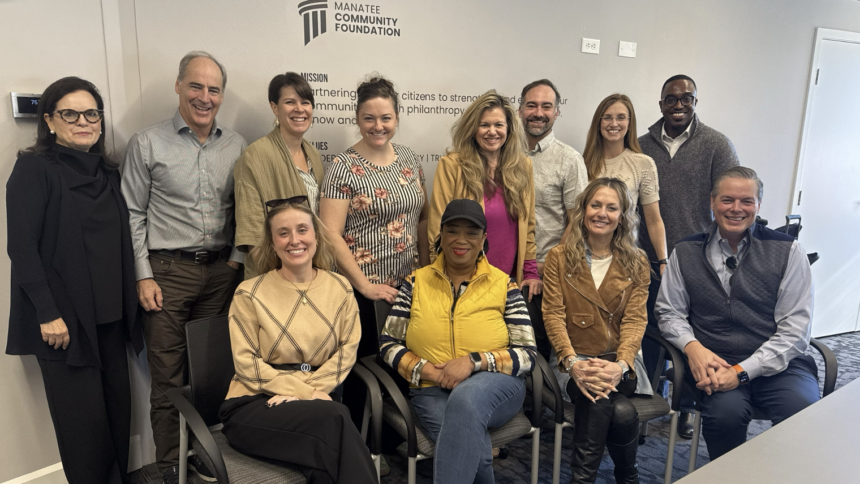
The most recent cohort of ELI for CEOs (Class of 2025-2026) gave their input on this important question.

A Rose by Any Other Name
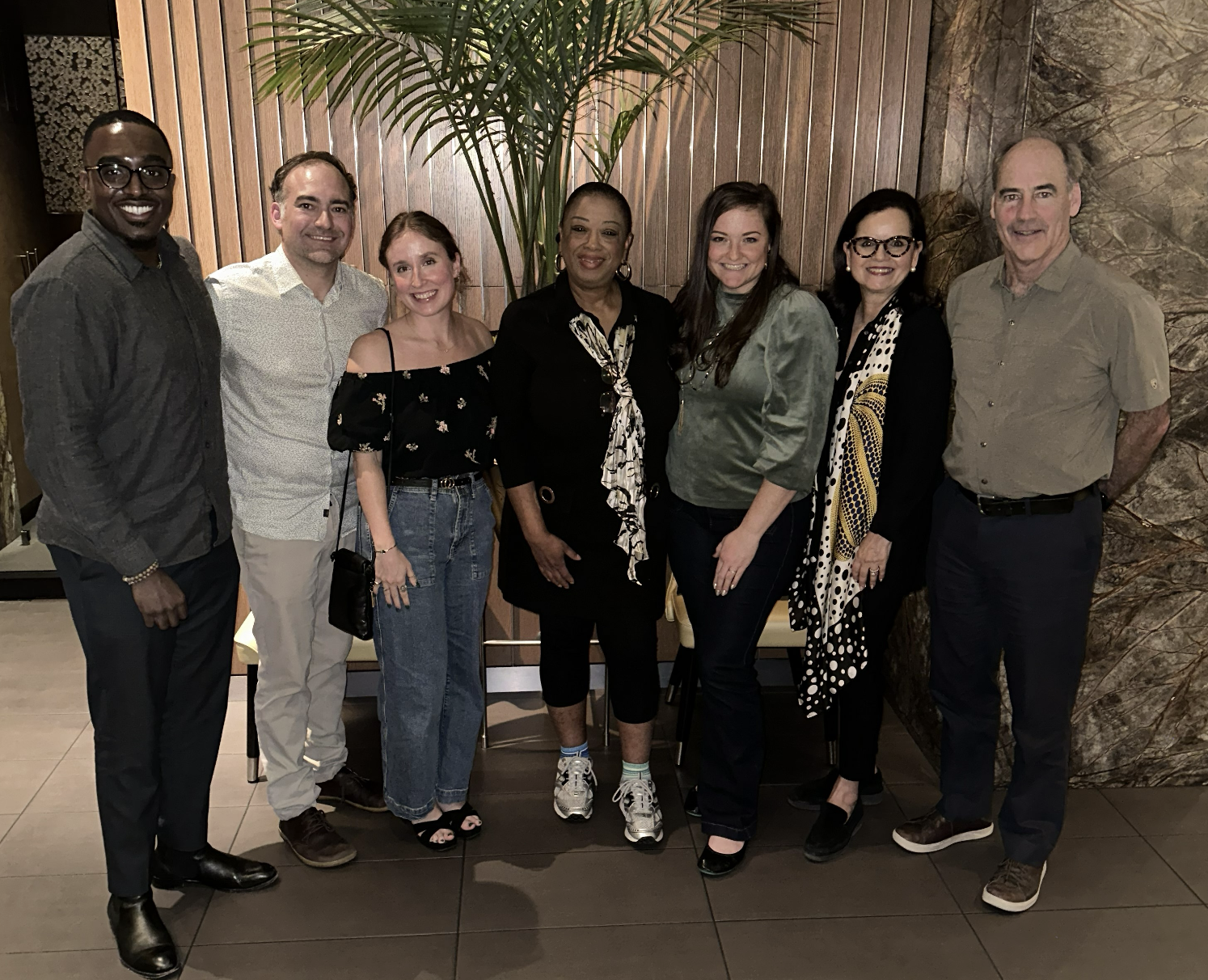
When asked how their definition of community leadership changed over the course of the program, the ELI for CEOs 25-26 cohort all had a similar response: that they were doing the work already, but they just didn’t have the name for it. “We do community leadership often, but don’t often call it community leadership—we call it doing our jobs,” says Ryanne Jennings, President/CEO of Wayne County Community Foundation and CFLeads Board member. ELI provided the cohort with the language and definitions needed to communicate their work as community leadership to their staff, their boards, and to their communities.
Chris Huber, President & CEO of the Black Hills Area Community Foundation, notes that community leadership and its Framework helps them differentiate themselves from other grant makers, or from donor-centric organizations. “We’re rooted in community, with its people and its place at the center,” Huber explains. This allows community foundations to serve as leaders, convenors, and conveyors when they are trusted by the community.
“Now I understand that it’s not a one size fits all definition,” says Becca Baumbach, President & CEO of the Community Foundation of Grand Forks, East Grand Forks & Region. Prior to ELI, Baumbach, who comes from a small, more rural foundation, was doing deep resident engagement work in her community. Her foundation’s Longest Table initiative has reached more than 2,500 community members since 2018, and serves as an opportunity to foster connection, lift up community voices, and marshal resources to where the community thinks they are most needed. ELI gave her the tools to name this initiative as community leadership, and to think more broadly about what the next phase will look like.
Impact Beyond Assets
As community leadership becomes more salient across the community foundation field, smaller and/or more rural foundations are showing that impact does not stem from asset size. For Tim Wohlgenant, President/CEO of the Yampa Valley Community Foundation, coming from a small community means being the trusted voice of nonprofits. He highlights the fact that these relationships are personal, and donors know that the foundation has deep knowledge of the nonprofits’ needs. Baumbach agrees, noting that in a small community, there exists greater “access to people,” and it’s easier to convene the community. “Even though we are smaller and a rural community foundation,” she insists, “we have something to contribute, as well.”
Many community foundations cover large service areas that include both urban cores and rural regions. The Central Carolina Community Foundation (CCCF) is a medium-sized foundation that covers 11 counties in South Carolina, 10 of which are rural. “Being a part of this cohort, I was looking for learnings that would help me think strategically about how we listen better in all 11 counties,” Georgia Mjartan, President and CEO of CCCF says, “how we engage the community, local residents, and nonprofits really deeply in each of those counties, and how we shape our grantmaking to be responsive to community needs.” She acknowledges the difficulty of balancing the priorities of the urban center with those of the rural counties, and how she does not want it to feel like they are “helicoptering in from the capital city and then leaving.” Throughout her time in the cohort, Mjartan adds that she appreciated the “gut check” against excuses that community leadership can’t be done while hearing from peers in rural and/or smaller foundations doing deep engagement, convening, and public sector work.
Community leadership consists of so much more than monetary assets- something smaller foundations understand intimately. Veronica L Thames, former CEO of the Manatee Community Foundation, insists that “Small community foundations can be in the space of community leadership. It’s not about the size of the foundation… but its intentionality… and value that it sees in itself as that actor in the community it serves.” Working across sectors, she says, is also essential for smaller foundations because they don’t always have the resources necessary, for example, to produce their own community-level data. Relationships, depth of conversations, and intentionality are all readily available resources to which community foundations, no matter their size, have access.
Shifting Perspectives, Shifting Priorities
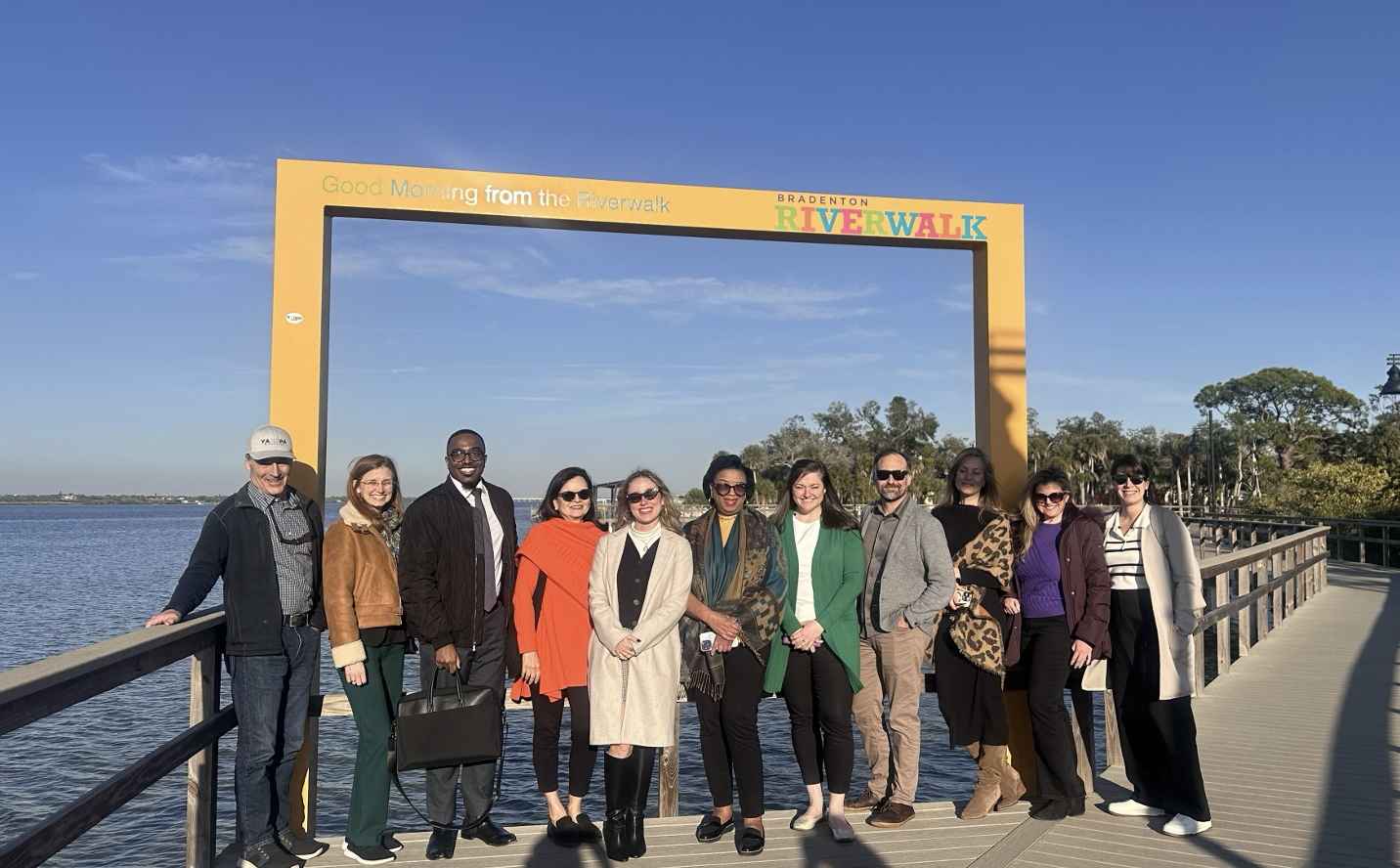
When community foundation leaders are already bought into community leadership, they come to ELI hungry for more tools, more exemplars, more connections. The ELI for CEOs 25-26 cohort had already laid the groundwork for community leadership at their respective community foundations. Through the thought partnership and immersion of ELI, they were able to shift their perspectives and shift their priorities.
Laura Ducceschi, President and CEO of the Scranton Area Community Foundation, came to ELI looking for guidance on how to decentralize the community leadership work, so it did not all stem from the CEO. “This program gave me the ability to give staff the tools to own the work,” she says, adding that she was also able to glean insight on how to empower community partners to move this work forward, as well. Because CEOs are constantly pulled in many different directions, it’s difficult for community leadership to live with just one person. Ducceschi acknowledges that being out in the community and developing deeper relationships with “trusted liaisons” is paramount for the work to advance.
Chris Huber agrees with the idea of being present in the community, noting that, “It’s easier to sit behind the desk, but the work that we’re doing requires more. We need to get out from behind our desks and talk to them.”
The ELI for CEOs 25-26 cohort learned that not only the community and staff have to be brought along with this work; the board does as well. Yampa Valley Community Foundation plans to bolster board communication by having them share their personal stories about what brought them to the foundation, as well as more intentionally share with the board what the foundation is teaching nonprofits in the community. Both Yampa Valley Community Foundation and Black Hills Area Community Foundation would like to leverage the Framework for Community Leadership to build a strategy with the board that incorporates community leadership from the beginning.
Speaking the Same Language
Many of the CEOs who go through the ELI program acknowledge how lonely their role can be. Carving out intentional time to connect with other community foundation CEOs breaks down barriers and allows leaders to discuss challenges candidly. The 25-26 cohort members mention that they were all speaking the same language; the group is wrestling with similar issues, and there is no need to avoid bringing up the hardest parts of the role. Laura Ducceschi explains: “We all came from different geographical areas, types of foundations, tenures, but we all were able to be very transparent and develop bonds.”
When asked what they would say to a community foundation CEO who has yet to go through ELI, the cohort unanimously agreed: “Do it!” Becca Baumbach highlights the importance of the program particularly for smaller and/or rural foundations, noting that each type of foundation has something to offer to the other. Ryanne Jennings adds that the exposure to other ideas and perspectives is invaluable, “not just for the present, but for the future.”
Community foundation CEOs get out of the ELI experience what they put into it. Georgia Mjartan says that “ELI can be whatever you need it to be,” as long as you are open to seeing the broad expanse of community foundations and their approaches to community leadership work. Mjartan knows now that “there’s no pre-baked agenda…of ways to do community leadership work.”
“ELI is an important investment in yourself, your community foundation, and your community,” concludes Jennings. Even community foundation leaders who have been in their roles for a long time can gain valuable insights and connections from the experience. “It is not just for people that are newer or at a midpoint,” Ducceschi emphasizes, “We never stop learning, improving, and refining.”
We are eager to see how much their communities thrive under their continued leadership.
We extend our gratitude to the ELI for CEOs 25-26 Cohort for their participation and their candor. Thank you to Becca Baumbach, Laura Ducceschi, Chris Huber, Ryanne Jennings, Georgia Mjartan, Veronica L Thames, and Tim Wohlgenant. Thank you as well to Mary L. Thomas, President and CEO of CFLeads, and Clotilde Perez-Bode Dedecker, former President and CEO of Community Foundation for Greater Buffalo and current Senior Advisor to CFLeads, for their leadership and guidance.


